Station Eleven

Written by Emily St. John Mandel. Published by Alfred A. Knopf in 2014. 333 pages. Rating: 4/5.

Introduction:

Have you ever wondered what life would be like if you survived the apocalypse?  Would you be duking it out in the Thunderdome against some four-armed mutants?  Maybe you’d be scavenging in the ruins of an old Walmart for cans of Boston baked beans. 

In this Arthur C. Clarke Award winning novel Emily St. John Mandel imagines a world after a deadly virus called the Georgian Flu devastates the world. The virus kills 99% of the world’s population, leaving very few survivors to make sense of the world after. Mandel’s storytelling weaves forward and backwards in time to tell an engaging story about life, death, and what it means to live.

Brief Synopsis:

Station Eleven begins with a performance of King Lear in a Toronto theater.  Arthur Leander, an older A-list actor, plays the starring role. Midway through his rendition of King Lear, Arthur suffers a fatal heart attack.  Fellow actors are stunned, the audience confused, all the while the Georgian Flu descends upon the world. Within a month of Arthur’s death, the world has forever changed.. Nothing will be the same.

The story jumps ahead twenty years to the perspective of Kirsten Raymonde.  She was an eight year old child actor in that Toronto theater two decades ago.  Now she’s a twenty-eight year old badass a part of a group of traveling actors and musicians called The Traveling Symphony.  They migrate around the Great Lakes area of what used to be the United States performing Shakespeare. Their motto, “survival is insufficient,” is painted on the side of one of their caravan. It’s a quote from Star Trek: Voyager and strikes at the heart of this book.

After getting introduced to Kirsten and the other members of the Traveling Symphony we learn they are headed towards St. Deborah by the Water. There they hope to stage a performance of A Midsummer Night’s Dream and see some old friends they left there years ago.

However, once they get to town, everything is different. There’s less people, more armed guards, and many new faces. Their friends are also nowhere to be found.

After questioning some of the townsfolk who stayed, Kirsten and the symphony find out a cult took over the town months ago. A man proclaiming to be a prophet rules St. Deborah by gun and bullet. Those who don’t bend to his will are exiled, or worse. Luckily, the former symphony members fled town soon after the prophet arrived.

Rumor has it the former symphony members fled towards a city called The museum of Civilization. It’s a village built into an airport with a collection of pre-flu memorabilia. The Traveling Symphony head out towards the museum, but along the way find a stowaway in one of their wagons. This triggers a feud between the Traveling Symphony and the prophet. A manhunt ensures. The story goes on.

Thoughts:

Station Eleven is a complex book with a ton of layers. It makes it difficult to fully encapsulate the story and plot lines of the book because Mandel jumps around the timeline constantly. The book begins as the pandemic begins, then jumps twenty years in the future, then back twenty, then forward fifteen, etc…

The nonlinear storyline is a major plus because we get a better understanding of the main characters and how they react to the apocalypse. By the end of the book we get a history of all the major characters, like Arthur, Kirsten, the prophet, and more. The way everthing connects together by the end is satisfying.

If you’re looking for a book about the end of the world or how the world ends, look elsewhere. Unlike other apocalypse novels, such as Max Brooks’ World War Z, Station Eleven focuses on the aftermath of the apocalypse. In an NPR interview about her book, Mandel says:

“I very purposely set much of the action 15 and then 20 years after that flu pandemic. And the reason for that is that I feel that most dystopian fiction tends to dwell on that immediate aftermath of horror and mayhem. What I was really interested in and writing about was what’s the new culture and the new world that begins to emerge?” -Emily St. John Mandel

Survival Is Insufficient: ‘Station Eleven’ Preserves Art After The Apocalypse

The new culture that emerges after the end of the world circles around the idea that survival is insufficient. The Traveling Symphony are actors and musicians, jobs you might not think would be necessary for survival in a post-apocalyptic world.

But what kind of life would people be living without art? Without Music? Without some form of entertainment?

You might have an okay life, it might be a little boring. It might be nasty, brutish, and short. Without the arts life would be missing something important. Survival alone isn’t sufficient.

I thought this book was a wonderful read. If you’re into dystopian or post-apocalyptic novels, this book will be a nice change of pace for you. It subverted my expectations and I didn’t think I’d enjoy it as much as I did.

Do you have any books in mind that challenged your expectations? Any books that took a familiar genre and flipped it on its side? Let me know in the comments.

Memory Craft: Improve Your Memory with the Most Powerful Methods in History

Written by Lynne Kelly. Published by Pegasus Books in 2019. 306 pages. Rating: 3.5/5.

Have you ever been introduced to somebody only to forget their name minutes later?  Have you ever walked into a room and asked: “Why the hell did I come in here?”  It’s odd what our minds chooses to keep or throw out. I’m like the proverbial goldfish, I have a terrible memory.

Memory Craft by [Lynne Kelly]

Early March I was browsing the new book section at the library and came across Memory Craft: Improve your Memory with the Most Powerful Methods in History by Lynne Kelly.  I finished it within a week!  Kelly is a science writer and researcher based in Australia.  Her research focuses on memory methods used by cultures who rely primarily on the oral tradition and mnemonic devices to record vast amounts of information.  Memory Craft was an informative read about how our memories work and the importance of having a keen mind.  Although I found the book to be slow at some points, there are many useful techniques within the book that make it a worthwhile read.

What It’s About?

Kelly starts the book off by explaining the rich history of memory and how it was a pillar of liberal education.  Memory techniques were taught in Roman schools by Cicero. Medieval European thinkers, such as St. Augustine, believed good memories were virtuous.  What happened to the importance of memory?

Memory Craft’s central argument is that we are worse off for neglecting our memories.  Through our phones we have an endless stream of information at our fingertips. But what good is that information if it isn’t in our head? Not much, Kelly would say. Memory allows us to make connections between seemingly unrelated topics more easily. We become more creative when we have actual knowledge within our heads.

Like muscles, our brains grow the more you exercise them.  Kelly provides over thirty memory techniques, ranging in practicality and purpose.  I found the method of loci, or memory palace, to be the best technique described.  It’s a method Cicero taught his students, but it’s not a technique unique to him; Kelly’s research found that people around the world have developed this technique on their own. 

I won’t get into the memory palaces much here, but Kelly defines them as, “A visualization of a trail of physical locations that are easy to remember in order” (Kelly 32).  You then use your imagination to walk through these locations to recall information.  It’s important that every fifth location be marked in some unique way, such as with a doorway or window (Kelly 33). 

I’ve created my own memory palace of my childhood home. I begin the trail in the front hall with markers such as a radiator, mirror, and coat rack. Then I snake through the first and second floors, going room to room until I end in the attic. In theory, I can store up to a hundred items in my memory palace. It’s a small feat when compared to professional memorizers Kelly describes; some memory athletes can recall thousands of items with their memory palaces!

There weren’t many things that I didn’t like with Memory Craft, those I found were matters of taste.  Some of the methods seemed impractical to me, such as the lukasa boards.  These boards act like physical memory palaces that you can create like an arts and craft project.  While I have no doubt they work, I just wonder why I would choose that over a mental memory palace?  Or write down the information instead of decorate a plank of wood?  However, even though I wouldn’t create a lukasa, I appreciate its inclusion in the book.  She does a wonderful job of describing each method and the history behind them.

Conclusion

Overall, Memory Craft was a good book and I recommend this book if you’d like to better your memory.  Kelly gets into the history, psychology, and science behind our memories and does so in a fairly entertaining way. There are plenty of methods to choose from that you could use in your everyday life. If you’re looking to improve something about yourself, why not your memory?

World War Z: An Oral History of the Zombie War

Written by Max Brooks. Published by Crown Publishers in 2006. 342 pages. Rating: 4/5.

We are living through a pandemic the world hasn’t seen in over a century.  COVID-19 has infected over 400,000+ people across 150+ countries.  Things are looking bleak as we sit inside our houses under self-quarantine.  We are supposed to practice social distancing to limit the spread of the Coronavirus and flatten the curve. 

I, like many of you, have a ton of time on my hands since my job has shut its doors to the public.  Only essential employees are needed to keep the place running.  To pass the time I have a stockpile of books to keep my sanity while I’m keeping away from others.  If there’s ever was a time to lounge around reading, now’s the time. 

World War Z: An Oral History of the Zombie War by [Brooks, Max]

The first book I finished since I started to self-quarantine is World War Z: An Oral History of the Zombie War by Max Brooks.  Brooks helped bring zombie horror into pop-culture in the early 2000s with The Zombie Survival Guide and World War Z, earning him recognition among horror enthusiasts and the US government.  He’s spoken to the US Naval War College and helped organize disaster responses; his website has more information about the projects he’s worked on.  Coincidentally, NPR’s Fresh Air with Terry Gross just released an interview with Brooks yesterday discussing an upcoming book of his and how the US has responded to the Coronavirus.  I highly recommend this forty-minute podcast, Brooks provides valuable insight into today’s pandemic and his books.   

When you think of a zombie book, you might envision something like Dawn of the Dead, Night of the Living Dead, or The Walking Dead.  You have a group of survivors hold up in some building while the dead rattle the doors and windows.  Brooks takes that trope and goes in a different direction.  In World War Z he takes the threat of a zombie apocalypse seriously and imagines what would happen on a world-wide scale.

The main premise of the book is that humanity won the zombie war and an intrepid reporter is traveling around to create an oral history of the war.  The narrator interviews dozens of veterans of the zombie war who gives us an understanding of how humanity fought back.  The series of interviews begin with a doctor who first investigated the virus in rural China and quickly progresses to how the virus spread.  Then the book covers people’s response to the zombie virus, what different countries did to combat the undead, etc…

World War Z tells a social history of this fictional zombie war.  The use of interviews makes the whole book seem real.  There are few instances of your cliché survivors getting overrun by a zombie horde.  Most of the interviews tell stories that you might not think about during a zombie apocalypse.  Brooks talks about how society would shift to favor people who know how to work with their hands.  He talks how the ineptitude of a bureaucracy could hamper disaster response.  There are real issues hidden behind this fictional zombie apocalypse novel. 

One of the events that stood out to me is the battle of Yonkers.  The United States wanted to stage a highly publicized battle against the undead outside of New York City.  They had about a thousand infantry armed with high-tech gadgets, supported by tanks and air, and still lost.  It’s not so much the battle itself that stands out to me, but the United States’ reliance on technology when waging war.  Brooks uses this fictional battle to highlight the United States’ hubris in believing technology wins wars.  Sure it plays a big part, but other factors go into winning a war.  Especially with an enemy who won’t ever surrender. 

Overall, this book was a fun, quick read.  It’s approach to the zombie apocalypse stands out as realistic, but not so much to make it boring.  Brooks is an excellent writer and his expertise is shown throughout this book.  I don’t think I’ll read his other zombie books like The Zombie Survival Guide or The Zombie Survival Guide: Recorded Attacks, but that’s because I got a ton of other books on my list.  The 2013 movie adaptation is worth a watch too, though it is an imperfect rendition of the book I reviewed here. 

Stay safe and don’t get infected with the Coronavirus. 
Do you have any books you plan on reading during this time of social distancing?  Let me know in the comments!

Everything Is F*cked: A Book About Hope

Written by Mark Manson. Published by HarperCollins in 2019. 232 pages. Rating: 4.5/5.

Have you ever stopped to think about how weird it is to be alive? We are super advanced big-brained apes who Forrest Gumpped our way into taming fire, building cities, and conquered most of the natural world. We have become apex predators; we dominate the planet.

If we take any moment in history and compare it to today, we tend to get a feeling us humans are always getting better. There is a sense of progress when we bring clean water to all or we eradicate diseases through vaccines. Life today seems as good as ever.

I recently read another boom by Mark Manson titled Everything is F*cked: A Book About Hope, a sequel to a book I reviewed last month, The Subtle Art of Not Giving A F*ck. Everything is F*cked approaches the idea of life being as good as ever and takes a contrarian view.

Manson calls bullshit on the idea that life is a box of chocolate. Sure, us living in developed countries have it great. We have plenty of food and live in relative safety.

But here’s the thing, suicide rates are up! Rates of anxiety, depression, and loneliness are through the crystal chandelier. Many people in “the most prosperous country in the world” must work two or three jobs to get by. Trip and break your back? Good luck not going bankrupt from your medical bills.

Manson suggests that we westerners are suffering from a crisis of hope. There are a lot of problems in our world and they don’t seem to be going anywhere. You could cite past statistics and show how hunger and violence are down, but that’s not going to help us in the future (Manson 18). Hope is for the future; we need something to help us.

What’s Everything is F*cked About:

Manson wrote Everything is F*cked: A Book About Hope in an informal style. It is like if you asked a friend what they think of hope. Your friend might go off on a tangent about Starwars: A New Hope or their stoic approach to life.

The back of the book contains comprehensive endnotes I found useful. They clarify the different points Manson makes throughout the book. Some of the endnotes mentioned Frederick Nietzsche and other philosophers. I’m a philosophy nut, so I love hearing about different ideas from philosophers.

The book has two parts, “Hope” and “Everything is Fucked.” Part I is about three things that come together to give us a feeling of hope. We first must have control over our lives and feel like we impact the world in some way. Then we must have clear and reliables we can construct our identity around. Lastly, we need to have a community we can rely on to support us to get through tough times.

However, by the end of Part I, hope is not discarded but put on the backburner. In a Nietzschean tone, we must become something beyond hope. We have to free ourselves from our dependence on hope and act despite whether we have hope or not.

Part II is about how a life without hope would look like. It touches upon subjects brought up in Part I but provides better ways of dealing with problems without depending on hope. Manson also outlines some of the problems modern people face and how we can realign our values, so we don’t get crazy.

The book was fantastic, it’s the best self-help book I’ve read this year so far. I’ve always thought myself to be a hopeful guy, but after reading Everything is F*cked I feel less like relying on hope and more on something definite. It made me want to take more responsibility in my own life. Instead of hoping things will get better, make things better.

The book has many interesting nuggets of wisdom, but here are two ideas that stood out to me:

“Self-Control is an illusion”

The ability to direct your mind towards a goal seems to be straight forward. Don’t have that extra slice of pizza, I’ll go out and only have one beer, I’ll watch one more episode of “Curb Your Enthusiasm.” But as we all know, we tend to slip up from time to time. We’ll eat that pizza or binge-watch our favorite shows for a few hours.

Manson puts forth an idea he calls “the classic assumption.” We assume that if we can control our emotions, we can better use our rational mind to achieve what is logically good for us. It’s an assumption made throughout history.

It’s completely wrong!

Emotions are an integral part of our minds, we can’t shut them off and if we did, it would lead to bad consequences. We’d lack empathy towards others and become apathetic in our own lives.

Manson gives a great analogy in the book dividing the brain in two: a thinking and a feeling brain. The feeling brain is what motivates us and is in control of our bodies. The thinking brain can inform the feeling brain and guide it to better actions.

He goes into greater detail on self-control in his book that is more digestible than his source material, such as David Hume or Nietsche.

“The Blue Dot Effect”

Prevalence induced concept change, or the “blue dot effect,” is a psychological phenomenon Manson introduces in the second part of Everything is F*cked: A Book About Hope. It describes a study done by David Levari, a professor at Harvard, how concepts change over time. His study gives examples such as aggression.

Aggression was once physical, but in recent years expanded to encompass, “making insufficient eye contact or asking people where they are from” (Levari 1). His paper is interesting and can be found here. If you don’t want to read his paper, here is a gist of his experiment:

Levari asked participants to look for blue dots in a collage of dots ranging from varied shades of purple to blue. He had the participants do this repeatedly and as the study went on, Levari decreased the number of blue dots in the collage so that there would be more purple than blue. Participants still recorded a similar number of blue dots to the numbers before he tinkered with the collages. He hypothesizes that as the experiment went on people’s conception of what is blue changed. This happened even after the participants were told about the removal of blue dots.

Manson connects this study to real life. No matter how good things get, we humans will always find something to complain about. We progress forward with new technology and innovations, but by doing so we fix old problems and create new ones.

Conclusion:

Everything is F*cked: A Book About Hope is a great read and I recommend it one hundred percent. If you pay attention to the politics or the news, you probably feel overwhelmed by all the bad news. I know I often feel that way and I hope for the best.

Hope can only do so much though. Manson provides an alternative to relying on hope, using psychology and philosophy to reinforce the points he makes. We do need hope to live, but we can’t rely solely on hope, we must approach problems rationally and take responsibility. We should lean into problems rather than constantly jump out of the way.

Have you read either The Subtle Art of Not Giving a F*ck or Everything is F*cked: A Book About Hope? If you did, what did you think of the book? I’d like to hear your thoughts!

George Orwell’s Thoughts on the English Language

“War is peace

Freedom is slavery

Ignorance is strength”

1984 by George Orwell

George Orwell is the pen name of Eric Blair, an English writer known for his essays and books about totalitarian and authoritarian ideologies. Animal Farm and Nineteen Eighty-Four are his two best known novels and they both show the dangers of these despotic ideologies. Animal Farm is a critique of Soviet style communism. It shows how revolutionary ideas can be subverted to become the same as those the revolution sought to overthrow. However, I think Nineteen Eighty-Four has more of a cultural impact than his other novels. This book bringing such terms as “big brother,” “thought crime,” and “Orwellian” into public discourse used today.

But what exactly does it mean for something to be called Orwellian? What is doublespeak? Why does it all matter?

We think by using language to express ideas with ourselves in our minds or with others through speaking or writing. Orwell recognized the importance language had with our ability to think. By banning words or changing their meaning a government can affect the way people think about the world.

Orwell wrote an essay titled “Politics and the English Language” prior to Nineteen Eighty-Four where he discusses the state of modern English. He thinks that it is degrading to a point of meaninglessness. We use ready made phrases that think for us so we don’t have to. He describes how politics is giving the English language plastic surgery, to make the indefensible arguments more palatable.

I’m going to summarize his paper and connect it to the real world.

Language

Orwell begins by asserting modern English is facing a decline due to a self-perpetuating system of an effect turning into a cause. He gives the example of an alcoholic. They feel like a failure, so they drink and as a result of drinking too much, they fail even more. Likewise, “It (language) becomes ugly and inaccurate because our thoughts are foolish, but the slovenliness of our language makes it easier to have foolish thoughts” (L&P 128).

It is then a matter of habit the English Language is degrading into vagueness and incompetence. These bad habits stem from four different sources:

  1. Dying Metaphors. Metaphors are useful to convey imagery through words, but they can get overused and become stale. Metaphors can lose the power they once had and Orwell suggests that their meaning gets subverted, causing the original meaning to change. When the original meaning changes, the metaphor becomes senseless.
    • For example, when people say “I could care less” they intend to mean they do not care at all about X. Logically, they could care less, so that means they care to some degree about X. What they meant to say is “I couldn’t care less.” This second phrase is logically consistent, the speaker cares so little of X that they couldn’t care any less than they already do.
  2. Operators or Verbal False Limbs. This habit is one that I had in college, but it is essentially padding your writing to make it look distinguished. Its when you add phrases when a single word or two would do, simplicity is swapped for a facade of authority. Passive voice is chosen over active, drawing out the point and making it sound worse. Verbal false limbs make writing less concise, adds ambiguity, and looks ugly!
  3. Pretentious Diction. When writers use complex wording to convey ideas that could be expressed in simple words. It’s not that Orwell is against having a large vocabulary, his objection is when people use jargon to convey a false sense of authority. It’s like bluffing in a game of poker, you might play up your hand to trick your opponents into misplaying.
  4. Meaningless Words. A word is devoid of meaning when its meaning cannot be shown in a given context or when there is no clearly agreed upon definition. Meaningless words are consistently used in a dishonest way, especially in politics and news. Consider when MSNBC host Chris Matthews compared Bernie Sanders’ win in Nevada to the Nazi invasion of France. The meaning of Nazi is lessened when it is used to describe a Jewish democratic presidential candidate who participated in the democratic process. It’s absurd!

Here’s an example of the four above problems written out in the form Orwell warns us of:

The former passage is beautiful and well put, the latter is outright hard to read. Try asking a friend, “what subjective experience of contemporary phenomena have you undergone today?” They’ll give you the stink eye and walk away. Meaning is obfuscated and beauty is made ugly. Although this is just a “parody,” Orwell suggests that most other modern writers would come closer to the second passage than the first if we were to write about human fortune.

Orwell continues by claiming modern English is less concerned about the individual meaning of words and more concerned with piecing together prewritten phrases. It is much easier and quicker to write something you’ve heard before than to come up with something original. Relying on stitching together phrases instead of individual words comes at the cost of lost meaning that affects even our own understanding/meaning of what we are trying to say. We lessen our ability to think clearly and critically because we are limited to the meaning of phrases we know. Orwell suggest we can better become writers/thinkers if we ask ourselves these questions:

  1. “What am I trying to say?
  2. What words will express it?
  3. What idioms or image will make it clearer?
  4. Is this image fresh enough to have an effect?
  5. Could I put it more shortly?
  6. Have I said anything that is avoidable ugly” (L&P 135).

Orwell challenges modern writers to become more meticulous in our writing. Choose individual words over ready-made phrases and do so with intention.

Politics

The second half of the essay deals with how politics uses language to manipulate the public into complacency. He begins by writing, “political speech and writing are largely the defense of the indefensible” (L&P 136). A politician cannot say that we are going to bomb cities full of innocent civilians until the government surrenders. They will instead say they will begin a “strategic bombing campaign in key military installations.”

This is called “doublespeak” and it’s what Orwell warns us about in Nineteen Eighty-Four and in this essay. Doublespeak is how concentration camps become re-education centers. Dead and dying soldiers become casualties. Civilians killed in military operations become collateral damage. Doublespeak makes the worse arguments more persuasive and intends to stymie objections to the objectionable.

Why Does This All Matter?

I asked earlier what does it mean to be Orwellian, what is doublethink, and why does it all matter?

To be Orwellian is to be at odds with the truth. Disinformation and the denial of truth are two clear indications a free society might be falling towards an Orwellian state. “Language and Politics” shows the importance of language and how it can be used to trick people into supporting authoritarian and totalitarian ideologies.

This all matters because democracies like the United States are fragile. We were built upon principles of free speech which make us susceptible to Orwellian disinformation. Truth is twisted like a bread bag twist tie. You can see in the news. Lies and falsehoods become “alternate facts.” Truth isn’t truth and what’s “true” is drawn on party lines.

Orwell’s essay suggests that language ought to be defended by those writing it or speaking it. He leaves it up to the politician, the journalist, the pundits, etc… While it’s well intentioned to think that way and gets at the problem at the source, it neglects similar problems free speech entails.

Free speech neglects bad actors, people who are intentionally spreading disinformation. To tell these people to do better won’t correct their behavior. We are left to our own devices to differentiate disinformation from truth. We must approach news and politics with skepticism and question what we are told. Don’t rely on just one or two sources. Get your information from a variety of sources. It’s not feasible to put broad constraints on the freedom of speech, if we do we risk becoming a step closer towards authoritarianism.

I suggest thinking of your news sources as falling on a long line. At one end is very left-wing political biases, the other being right-wing biases. Try to get enough sources from both ends, the truth may lie somewhere in the middle.

Be weary of what you hear in the news. Much of what is reported based upon what’ll get the most clicks or attention. Watch for the language the news and politicians. What ideas might they be trying to sell you on? Look at how they phrase their statements, are they neglecting the truth? Are they pushing an agenda?

Sources and Links

  • Here is a .pdf of Orwell’s essay “Language and Politics.” It’s a short read, about fourteen pages, but it is poignant. It is worth your time. He provides numerous examples to better illustrate what he means by language is suffering degradation.
    • (I use L&P above to reference this article!)
  • TED-Ed makes great videos explaining different books and concepts found within them. I highly recommend their five minute video on what it means to be Orwellian.
  • Of course, I recommend Nineteen Eighty-Four. It’s a classic dystopian novel and I read it when I was a teenager. I fell in love with the book! It got me interested in literature and in politics.
  • Featured image credit: Photo by Kyle Glenn on Unsplash

Between The World And Me

Written by Ta-Nehisi Coates. Published by Spiegel & Grau in 2015. 152 pages. Rating: 4/5.

In his national book award winning memoir, Between the World and Me, Ta-Nehisi Coates explores issues of race by describing how it was like growing up in 1980s Baltimore and attending Howard University. Coates is a distinguished writer, author, and journalist and has authored many books including The Water Dancer, We Were Eight Years in Power, and The Beautiful Struggle! He has also written for Marvel comics, producing a series of Captain America and Black Panther Comics. He’s worked for a few different magazines, such as the New York Times Magazine, but is better known for his work with The Atlantic. Between the World and Me gives insight into what it’s like growing up in a country that neglects its racist past.

Between the World and Me by [Coates, Ta-Nehisi]

Although Between the World and Me is a memoir, it is also an open letter to his son, Samori. Coates warns a fifteen year old Samori that he will be judged because of the color of his skin. People will tell him to be “twice as good” to get ahead in life. Ta-nehisi is opposed to this adage, equating it to be twice as good is to “accept half as much.” It’s a salient point, why is there an expectation for African Americans to work twice as hard but accept half as much?

This book got me think of all these questions about race that I otherwise wouldn’t have had. The book brought these ideas into my consciousness.

The streets of the Baltimore of Coates’s youth were dangerous. It wouldn’t be strange to witness a fight on your way home from school. Shootings were common, anyone in his neighborhood could name a person affected by street violence. Coates recalled a boy in a ski jacket brandishing a gun and pointing it at him. He was saved by luck; the boy’s friends calmed the armed boy down. This scene, and many others, cause Coates to liken his upbringing to a game. To survive you must learn the rules of the game, which feeds back into much of the behavior that makes the streets so dangerous. Coates found an escape though, through writing and consciousness building. He was able to leave Baltimore to attend Howard University in Washington, D.C., it was a way for him save himself.

When reading this book I picked up on a common theme of one’s own body and how it was constantly at risk. Coates describes his youth as:

“To be black in the Baltimore of my youth was to be naked before the elements of the world, before all the guns, fists, knives, crack, rape, and disease. The nakedness is not an error, nor pathology. The nakedness is the correct and intended result of policy, the predictable upshot of people forced for centuries to live under fear. The law did not protect us.”

Between the World and Me, page 17

These elements of the world battered the youth of Baltimore. The feedback loops generated from the violence, drugs, and poverty produced a harsh environment where it was nearly impossible to flourish. Black bodies had the rules against them in this game. Coates wants his son to be prepared for the institutionalized problems that lie ahead in his future.

Between the World and Me is a great book that looks at societal issues of race in a personal manner. It took me a week or so to dwell on it and absorb its contents, but I think it was well worth it. I’m a white guy living in the predominantly white state of South Dakota, so a lot of these issues tend to go over my head. Most of my exposure to racial issues come from the news and textbooks, but this memoir gets into the mind of someone who’s been experiencing it first-hand! I recommend this book if you want to know more about contemporary issues of race. It’s a short book and you could finish it quickly, but its message will linger after the fact.

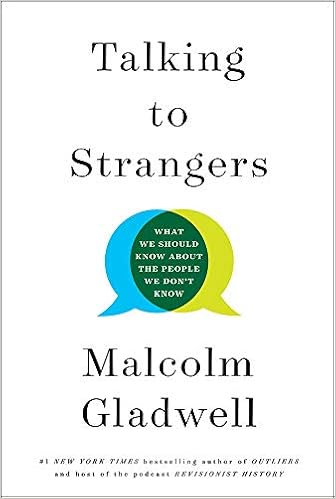
Talking to Strangers: What We Should Know About the People We Don’t

Written by Malcolm Gladwell. Published by Little, Brown and Company in 2019. 346 pages. Rating: 5/5.

July 10, 2015 Sandra Bland was stopped for a minor traffic violation by State Trooper Brian Encinia in Waller County, Texas leading to her arrest. Three days later she would be found dead in her cell, hanging from a makeshift noose. How does a routine traffic stop escalate into an arrest and subsequent loss of a life? In his book Talking to Strangers Malcolm Gladwell attempts an answer to that question, but also expands upon how little we know about the people we don’t. In a methodical approach to the problems of strangers, Gladwell examines different topics ranging from spies and Cold War intrigue to crimes and suicides. In the end, through the evidence he provides, he produces a compelling argument why Sandra Bland’s arrest went so poorly.

Before reading the book and this review, I suggest watching the video of Bland’s arrest here, just to get a good sense of how bad it went and give context to Gladwell’s book.

Gladwell begins and ends his book by examining the case of Sandra Bland but divides most of the book between five parts: “Spies and Diplomats: Two Puzzles,” “Default to Truth,” “Transparency,” “Lessons,” and “Coupling.” Each of these parts build upon different misconceptions we tend to be seemingly unaware of. For example, in “Spies and Diplomats: Two Puzzles,” Gladwell describes two things that we all tend to do. The first puzzle asks why we cannot tell when the person across from us is lying to our face. The second puzzle asks why is it that when we meet a stranger, we do worse at making sense of them. To answer these questions, he uses the example of Neville Chamberlain’s meeting with Adolf Hitler prior to World War II, New York City Judges deciding bail for dangerous criminals, and Cuban/German spies and double agents. By examining these cases, Gladwell finds some valuable insights that he builds upon throughout the book, mainly that we suffer from an illusion of asymmetric insight; we tend to believe that we know more about others than they know about us. It’s through this illusion that we trust those we should doubt and doubt those we should trust.

Talking to Strangers goes beyond this illusion though, there are a ton of different psychological phenomena that obfuscate the truth form us. We tend to “default to truth” when talking to others. We tend to place a ton of weight on the demeanor of others in determining whether we can truth a person. Gladwell gets into the darker side of humanity by looking at recent news events to give insight into our psychology. The Stanford Rape Case involving Brock Turner or the Penn State cover up of Jerry Sandusky are two events that sparked nationwide outrage and Gladwell gives succinct summaries of each and what we can learn from them.

When it comes down to it, Talking to Strangers really is about human behavior, and Gladwell is no stranger to this topic. He’s written a few other books about human behavior including: Outliers, Blink, and The Tipping Point. These books have been well received nationally and for good reason! Gladwell writes really well about topics that would otherwise be dull. His research spans years is very thorough, the notes in the back of the book show that he uses a plethora of good, valid sources to give weight to the claims he makes.

I wholeheartedly recommend Talking to Strangers by Malcolm Gladwell. It’s an interesting read and is entertaining despite some of the darker subject matter. I think Talking to Strangers does help you know more about the people you don’t, but it’s not a definitive guidebook. Gladwell just dispels many myths and misconceptions about truth, falsehood, and deception to better prepare the reader to make better decisions.

But hey, I’m just a stranger on the internet. Would you trust me?

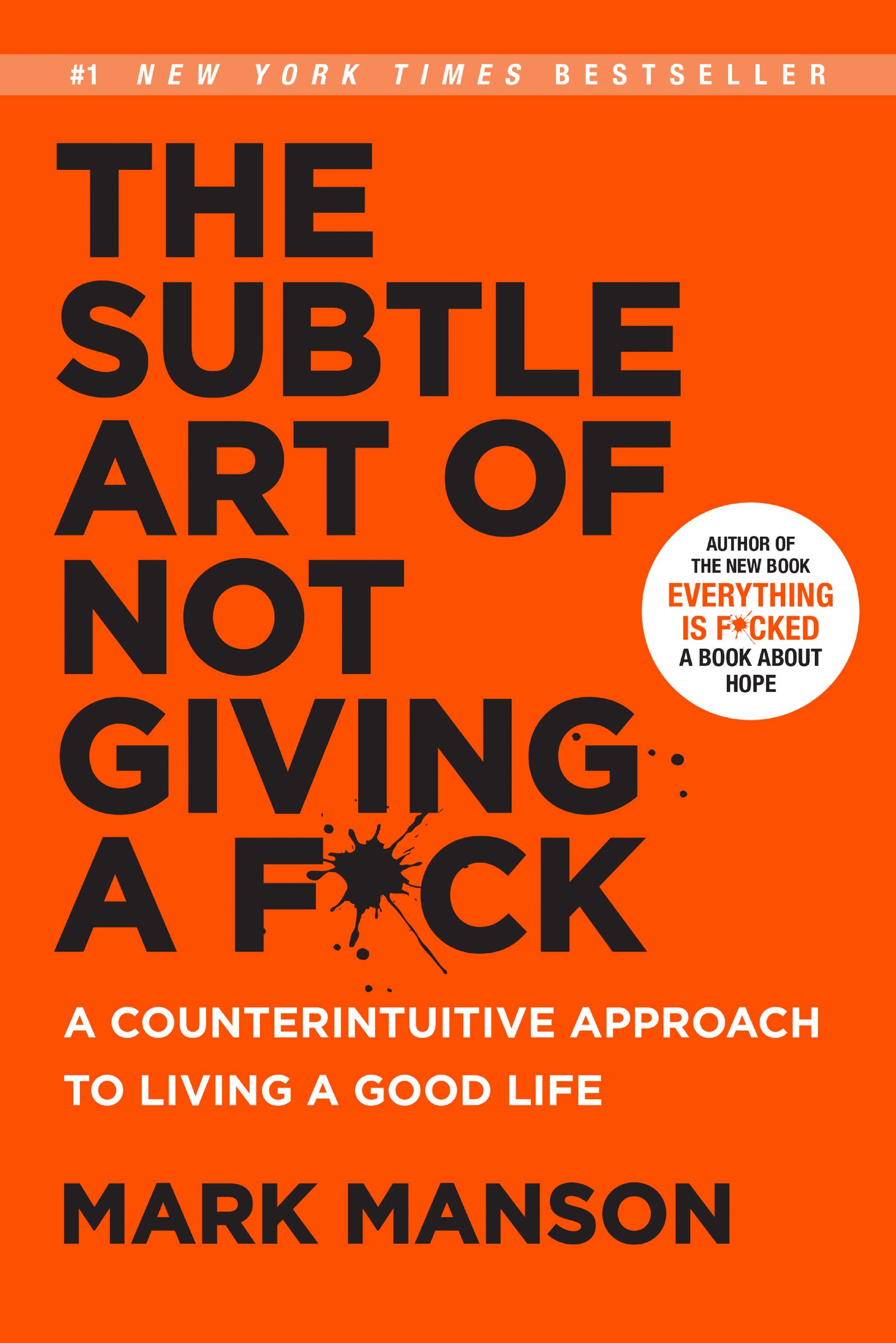
The Subtle Art of Not Giving a F*ck: A Counterintuitive Approach To Living A Good Life

Written by Mark Manson. Published by HarperOne in 2016. 212 pages. Rating: 4/5.

Image result for The Subtle Art of not giving a fuck

Our world is full of distractions. Our phones constantly push us notifications. We receive thousands of junk emails claiming we need to look at these “amazing” deals. Television bombard us with a nauseating amount of information that has has little to no bearing on our day to day lives. Even a lot of what we call “news” isn’t even news, it’s entertainment made to look important. All these distractions demand we pay attention and give a damn about what they say. In his wildly popular book, The Subtle Art of Not Giving a Fuck, renown blogger and author Mark Manson writes about how we can live a better life by being more selective about what we give our attention over to.

The Subtle Art of Not Giving a Fuck is a self-help book but is written in such a way that makes it feel out of place in that genre. It shares the common theme of self-help books by asserting that you need to do X, Y, Z in order to feel better, obtain mental clarity, be your best self etc… Within the first chapter the book Manson gives a concise goal for his book, stating: “This book will help you think a little bit more clearly about what you’re choosing to find important in life and what you’re choosing to find unimportant” (20). His thesis statement stuck out to me because what Manson is asking us to realign our values in order to live a better life.

These values that we ought to find important are as the title suggests, counterintuitive. Happiness seems like a value we should strive for, but Manson finds that not to be the case. Referring to it as “the hedonic treadmill,” he says that more we aim for happiness, the less happiness we’ll experience. Instead, we should aim for meaningful suffering, which is to say we should aim for something that will bring us fulfillment but in the process it might not be pleasant. For example, we might need to go on a diet to lose weight and achieve our ideal body. Cutting calories from our diet can be painful because we might really want to go to the all you can eat sushi bar with our friends, but if we do that constantly we won’t achieve our goal. We need to suffer to grow (or shrink!).

Happiness and suffering are just two topics in the book. There are a ton of insightful chapters about how we view ourselves, humility is something we ought to practice, and don’t be afraid of failure. “The path to happiness is full of shitheaps and shame” (38). Risk being bold. Don’t care about what other people think. If we give too many f*cks about what others think, we won’t do anything at all.

The Subtle art of Not Giving a F*ck: A Counterintuitive Approach to Living a Good Life is a great book and I recommend it others who are into self-help books and want a different approach to the genre. The subject matter is applicable to most people, especially those heading into college or finding a career. Don’t place too much value on the things that don’t matter, common sense right? This book will help you find find good values that will help steer you towards a better life.

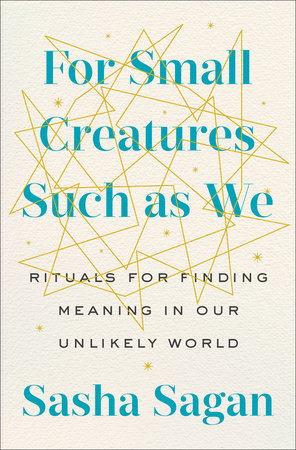
For Small Creatures Such as We: Rituals For Finding Meaning In Our Unlikely World

Written by Sasha Sagan. Published by G.P. Putnam’s Sons in 2019. 275 pages. Rating: 3/5.

A typical day for me begins with waking up at 8:30 am. I roll out of bed and descend my stairs and walk to the kitchen where I begin my first ritual of the day: I brew a pot of coffee. My two cats, Persia and Xena, greet me next to their food bowls as they wait for breakfast. Despite their mewing for food, I tend to the coffee pot first. I scoop some coffee beans from the coffee bag and put them into an electric coffee grinder. As the hard beans become a soft powder, the scent of coffee creeps into the air. The loud whirring of the grinder penetrates the quiet house, scares my two cats; they are sent scrambling out of the kitchen and up the back stairs. With the beans ground, I can finally put them into the machine, brew my morning coffee and begin my day.

You could say I start my daily grind with a daily grind.

The first nonfiction book I read in 2020 is Sasha Sagan’s For Small Creatures Such as We: rituals for finding meaning in our unlikely world. This book is about the inherent absurdness life is. We are all products of an unlikely existence, thrust into the universe and forced to make sense of our lives. We live on a giant rock hurdling through the cosmos and as far as we can tell, the Earth is the only planet with life on it. Considering how vast the universe is, this is astonishing. As humans, we experience many things that hold significance in our lives and we tend to celebrate them for a number of reasons. Child birth, the changing of the seasons, weddings, and even death are topics Sagan explores throughout her book.

For Small Creatures Such as We looks at many different religious perspectives to formulate ways that we can incorporate rituals into out lives. Sagan’s aim for the book is to bridge the gap between science and religion, as they both offer different benefits to humanity. She claims that “Religion, at best, facilitate empathy, gratitude, and awe. Science, at its best, reveals true grandeur beyond our wildest dreams” (18). Religion may help us answer what’s the purpose of life, how should we treat each other, and how did we all get here? Science can help us explain more tangible parts of our world.

The book reads like a memoir. Sasha Sagan reminisces about the many different rituals she’s experienced throughout her life as a Jewish woman. She wouldn’t consider herself to be much of a religious person, but spiritual person. She remembers her father, Carl Sagan, telling her that, “It’s dangerous to believe things because you want them to be true” (2). With this idea in mind, she would celebrate many Jewish traditions while remaining somewhat skeptical about the religion itself. It’s as if she approaches religion in a scientific lens.

Sagan’s message of reconciliation between science and spirituality stood out to me while reading. You don’t have to be religious to celebrate Christmas, Easter, or any other religious holiday. Of course, the significance of the holiday is diminished if you don’t believe in the religious nature of it. But there are other aspects to holidays and rituals that make them worth while.

One thing that makes Christmas special in my family is the food. One ritual that makes Christmas special is the Polish-Ukrainian food I help cook with my dad.

For instance, Christmas is a Christian tradition to celebrate the birth of Jesus Christ. It is celebrated in a number of ways, ranging from going to church and acts of community service to spending time with family and opening presents. It’s a time of giving and being thankful for what you got. In my experience, Christmas is celebrated by spending time with my family by cooking a big meal and playing games. I typically help prepare much of the traditional Polish and Ukrainian dishes my dad and his parents would make during their Christmas celebrations. This food is delicious and I love making it. Christmas wouldn’t feel like Christmas without pirogi (a mashed potato dumpling).

For Small Creatures Such as We: Rituals for Finding Meaning in Our Unlikely World is a book about bridging the gap between secular and religious worlds so that we can better understand and celebrate our existence. Although I’d consider myself more spiritual than religious, this book makes me think about the world from a perspective I’ve largely set aside as being not for me. It is a good thing to expose yourself to new and unfamiliar ideas you perhaps shy away from. I’d recommend this book if you’re looking for a feel-good book that makes you more aware of your day-to-day life. It made me examine some of the rituals I do on a regular basis and question what do I get from doing these rituals?

What are some rituals you do daily, monthly, or even just on holidays? What significance do they hold in your life?