Written by Sasha Sagan. Published by G.P. Putnam’s Sons in 2019. 275 pages. Rating: 3/5.
A typical day for me begins with waking up at 8:30 am. I roll out of bed and descend my stairs and walk to the kitchen where I begin my first ritual of the day: I brew a pot of coffee. My two cats, Persia and Xena, greet me next to their food bowls as they wait for breakfast. Despite their mewing for food, I tend to the coffee pot first. I scoop some coffee beans from the coffee bag and put them into an electric coffee grinder. As the hard beans become a soft powder, the scent of coffee creeps into the air. The loud whirring of the grinder penetrates the quiet house, scares my two cats; they are sent scrambling out of the kitchen and up the back stairs. With the beans ground, I can finally put them into the machine, brew my morning coffee and begin my day.
You could say I start my daily grind with a daily grind.
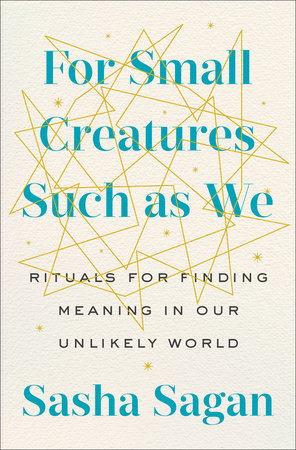
The first nonfiction book I read in 2020 is Sasha Sagan’s For Small Creatures Such as We: rituals for finding meaning in our unlikely world. This book is about the inherent absurdness life is. We are all products of an unlikely existence, thrust into the universe and forced to make sense of our lives. We live on a giant rock hurdling through the cosmos and as far as we can tell, the Earth is the only planet with life on it. Considering how vast the universe is, this is astonishing. As humans, we experience many things that hold significance in our lives and we tend to celebrate them for a number of reasons. Child birth, the changing of the seasons, weddings, and even death are topics Sagan explores throughout her book.
For Small Creatures Such as We looks at many different religious perspectives to formulate ways that we can incorporate rituals into out lives. Sagan’s aim for the book is to bridge the gap between science and religion, as they both offer different benefits to humanity. She claims that “Religion, at best, facilitate empathy, gratitude, and awe. Science, at its best, reveals true grandeur beyond our wildest dreams” (18). Religion may help us answer what’s the purpose of life, how should we treat each other, and how did we all get here? Science can help us explain more tangible parts of our world.
The book reads like a memoir. Sasha Sagan reminisces about the many different rituals she’s experienced throughout her life as a Jewish woman. She wouldn’t consider herself to be much of a religious person, but spiritual person. She remembers her father, Carl Sagan, telling her that, “It’s dangerous to believe things because you want them to be true” (2). With this idea in mind, she would celebrate many Jewish traditions while remaining somewhat skeptical about the religion itself. It’s as if she approaches religion in a scientific lens.
Sagan’s message of reconciliation between science and spirituality stood out to me while reading. You don’t have to be religious to celebrate Christmas, Easter, or any other religious holiday. Of course, the significance of the holiday is diminished if you don’t believe in the religious nature of it. But there are other aspects to holidays and rituals that make them worth while.

For instance, Christmas is a Christian tradition to celebrate the birth of Jesus Christ. It is celebrated in a number of ways, ranging from going to church and acts of community service to spending time with family and opening presents. It’s a time of giving and being thankful for what you got. In my experience, Christmas is celebrated by spending time with my family by cooking a big meal and playing games. I typically help prepare much of the traditional Polish and Ukrainian dishes my dad and his parents would make during their Christmas celebrations. This food is delicious and I love making it. Christmas wouldn’t feel like Christmas without pirogi (a mashed potato dumpling).
For Small Creatures Such as We: Rituals for Finding Meaning in Our Unlikely World is a book about bridging the gap between secular and religious worlds so that we can better understand and celebrate our existence. Although I’d consider myself more spiritual than religious, this book makes me think about the world from a perspective I’ve largely set aside as being not for me. It is a good thing to expose yourself to new and unfamiliar ideas you perhaps shy away from. I’d recommend this book if you’re looking for a feel-good book that makes you more aware of your day-to-day life. It made me examine some of the rituals I do on a regular basis and question what do I get from doing these rituals?
What are some rituals you do daily, monthly, or even just on holidays? What significance do they hold in your life?
 The Retrospective Reader